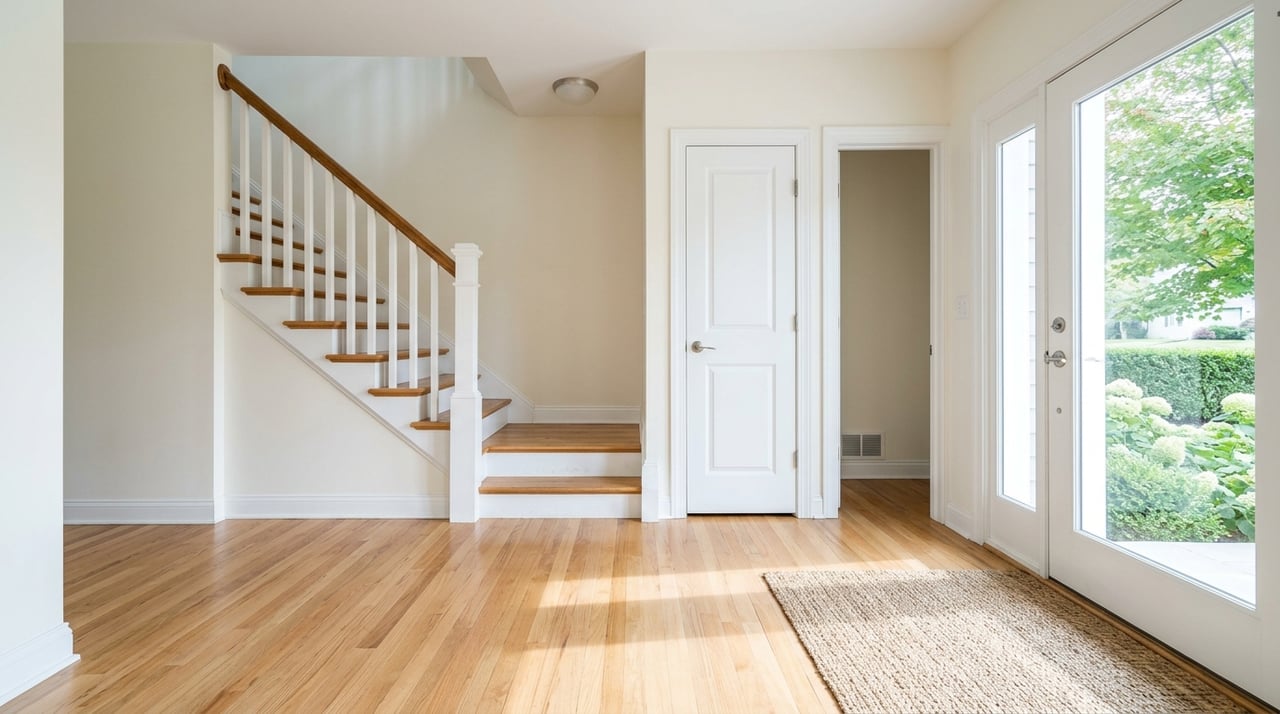
From City Condo To La Grange Home: A Move-Up Buyer Guide
May 14, 2026
May 14, 2026
Thinking about trading your city condo for a house in La Grange? You are not alone. Many move-up buyers want more space, easier parking, and a suburban routine that still keeps Chicago within reach. The challenge is that moving up is not just about getting a bigger place. It is also about timing, budgeting, and understanding how La Grange’s market works. This guide will help you think through the numbers, the logistics, and the lifestyle shift so you can make smart next steps. Let’s dive in.
La Grange offers a mix that is hard to ignore if you are coming from condo living. The village has a compact footprint, a housing stock that is primarily single-family homes, and strong commuter access. Census data also shows an owner-occupied housing rate of 81.5%, which supports its reputation as an ownership-focused community.
You also get a suburban setting without feeling far removed from the city. The village says downtown Chicago is about 14 miles away, and the Chicago Loop is accessible in about 30 minutes. Census data puts the mean travel time to work at 28.5 minutes, which fits that close-in commuter profile.
Beyond the commute, La Grange offers day-to-day convenience. The village highlights a walkable downtown with dining, shopping, entertainment, and a movie theater. The Park District of La Grange serves 11 parks across 67 acres and offers more than 1,500 recreation programs each year.
If you are moving from a condo to a single-family home, one of your first questions is usually simple: What does a house actually cost here? In La Grange, the answer depends on which metric you are looking at.
Recent March 2026 snapshots show different price points because they measure different things. Realtor.com reported a median listing price of $443,450. Zillow reported a median list price of $519,100 and an average home value of $639,655. Redfin reported a median sale price of $775,000.
Those numbers are not interchangeable. Listing price, average home value, and closed-sale price each capture a different part of the market. The safest way to read them is as a range that shows La Grange has options, but it is not a bargain-basement market.
The market also appears competitive. Realtor.com reported 21 median days on market and a 102% sale-to-list ratio, while Redfin reported about 3 offers on average. That means you should expect a market where well-positioned homes can move quickly.
Move-up buyers often compare several west suburbs at once. Based on recent Realtor.com listing-price snapshots, La Grange Park was at $575,000, Hinsdale at $1.15 million, and Western Springs at $1.25 million. All three were also described as seller’s markets.
That comparison matters because it helps frame La Grange’s position. On current listing-price snapshots, La Grange sits below Hinsdale, Western Springs, and La Grange Park. Even so, it is still a competitive market, not a soft one.
For buyers, that can create an interesting middle ground. You may find La Grange appealing if you want a close-in suburb with commuter convenience and single-family inventory, but you are also trying to stay below the price levels seen in some nearby markets.
A move from condo ownership to a detached home changes more than your square footage. It changes your monthly cost structure. That is why your budget needs to go beyond principal and interest.
Consumer guidance from the CFPB says buyers should budget for maintenance, repairs, utilities, property taxes, insurance, HOA dues if applicable, moving costs, furniture, renovations, and an emergency cushion of 3 to 6 months of expenses. Closing costs also typically run about 2% to 5% of the purchase price, separate from your down payment.
Using Zillow’s March 31, 2026 average home value of $639,655 as a rough planning anchor, a 20% down payment would be about $127,931. Closing costs at 2% to 5% would land around $12,793 to $31,983. At Freddie Mac’s reported 30-year fixed average of 6.37% on May 7, 2026, principal and interest would be about $3,191 per month before taxes and insurance.
That last part matters a lot. Census data shows median monthly owner costs with a mortgage in La Grange at $3,622. That is a helpful reminder that taxes and insurance can push your all-in payment well above the mortgage calculation alone.
If you own a condo now, do not make the mistake of comparing only your current mortgage payment to a future mortgage payment. A better comparison is your full condo carrying cost versus your full house carrying cost.
For many move-up buyers, condo HOA dues covered some costs that will become your direct responsibility in a single-family home. Think roof repairs, exterior upkeep, landscaping, snow removal, and sometimes water or trash service. In a house, those expenses may not arrive every month, but they still need to be part of your plan.
It helps to think about your cash needs in layers:
If you put less than 20% down, the CFPB notes that mortgage insurance may also apply. That can increase your monthly payment, so it is worth stress-testing your budget before you start writing offers.
In many cases, yes. The CFPB says that if you want to move, you normally try to sell your current home first before buying another one. For move-up buyers, that approach can reduce the risk of carrying two housing payments at once and give you a clearer picture of your available cash.
That said, the right sequence depends on your finances, flexibility, and tolerance for risk. In a market like La Grange, where homes can move quickly, some buyers worry that selling first will leave them scrambling to find the right home. That is a real concern, but carrying two homes can create pressure too.
A strong starting point is to get clear on your sale proceeds, your lender preapproval, and your target monthly payment before you shop seriously. When you know those numbers, your timing decisions get easier.
The biggest stress point for move-up buyers is often the handoff between closings. What happens if your condo sells before your new house is ready? Or if you find the right La Grange home before your condo closes?
While every transaction is different, the key is to plan early and negotiate carefully. Fast-moving markets leave less room for last-minute decisions. That is why your purchase strategy should be built around realistic timing, not ideal timing.
The CFPB recommends making offers contingent on financing and a satisfactory inspection. Those contingencies can protect you if your loan falls through or the inspection uncovers serious issues.
The CFPB also advises buyers to attend the inspection if possible and to negotiate repairs or credits when problems are found. In a competitive market, that does not mean every seller will agree to everything. It does mean you should know what you are taking on before you close.
You do not need to wait until your condo sells to start preparing. The CFPB says buyers can explore loan choices and shop for homes at the same time, but they should already have met with lenders, received a preapproval letter, and selected the type of loan that fits their budget.
The CFPB also notes that buyers can often shop for some closing service providers, such as title insurance and settlement agents. Comparing options ahead of time may help you save money and avoid rushed decisions.
Space is usually the headline reason people leave condo living. But the day-to-day routine matters just as much. In La Grange, that routine often means more space inside, more control over your property, and a different relationship to commuting and parking.
The village says Metra generates about 5,000 daily boardings from the La Grange Road and Stone Avenue stations, and both are BNSF Zone 3 stations. La Grange Road has 412 parking spaces and connects to Pace routes 302 and 330, while Stone Avenue has 501 parking spaces. The village also uses decal parking and designated commuter lots, including Burlington/7th and Burlington/Brainard.
For someone coming from the city, that can feel like a meaningful lifestyle shift. You may trade garage fees, street parking concerns, or tighter indoor space for a home with more square footage and a yard. In exchange, you also take on more home maintenance, utility costs, and upkeep.
For many buyers, La Grange checks important boxes. It offers strong commuter access, a primarily single-family housing stock, a walkable downtown, and pricing that currently appears lower than several nearby close-in suburbs based on listing-price snapshots. That does not make it cheap, but it can make it a compelling value comparison.
The key is to approach the move with clear eyes. A larger home can improve your daily life, but it also changes your monthly costs, your cash needs, and your timing strategy. The buyers who feel best about the move are usually the ones who plan for the full picture, not just the mortgage payment.
If you are thinking about moving from a city condo to a La Grange home, the smartest next step is a strategy conversation before you make any major move. A thoughtful plan can help you align your sale timing, purchase budget, and offer terms so the transition feels manageable. When you are ready, connect with Alejandro Trujillo for clear, data-driven guidance tailored to your move-up goals.
With a focus on continuing to educate their agents and continued attention to an amazing culture they have built, Alejandro & Mike have a huge vision for RE/MAX NEXT and their clients and work every day to achieve it.

ALEJANDRO TRUJILLO
LAKEVIEW 3401 N Broadway St Chicago IL 60657 GOLD COAST 1207 N Dearborn St Chicago IL 60610