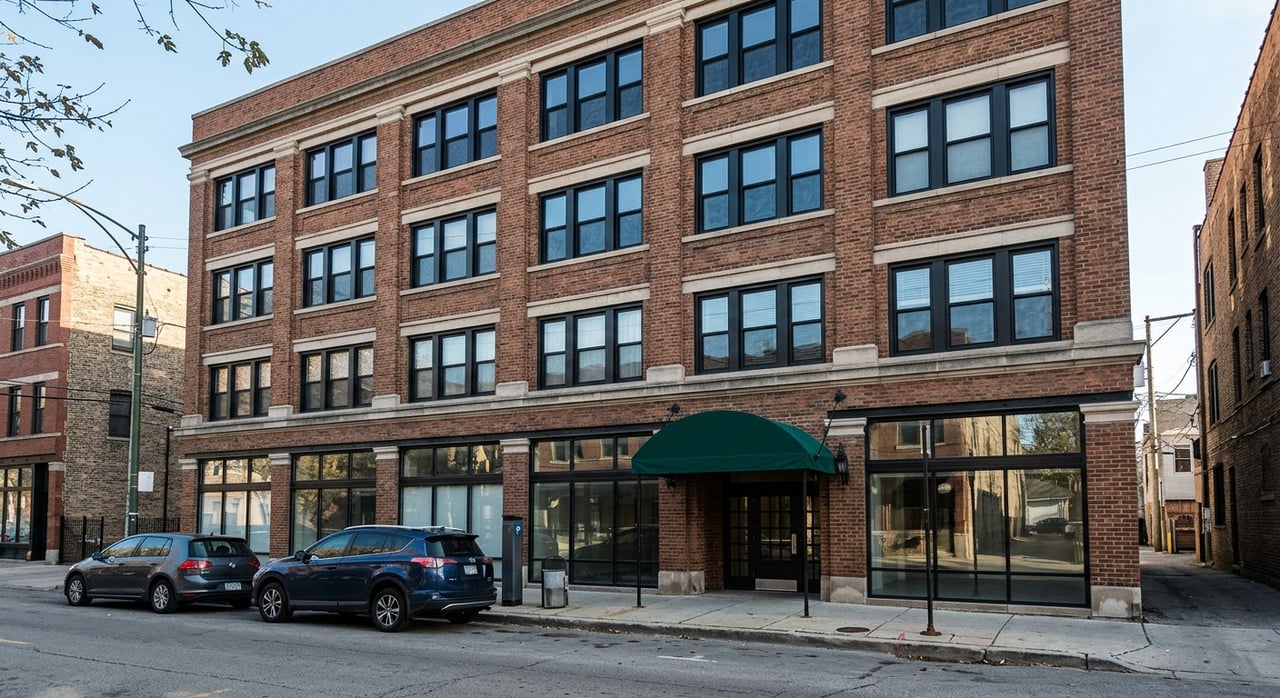
Buying A Lake View Condo With Strong Rental Potential
June 11, 2026
June 11, 2026
If you want a Lake View condo that can work for you now and rent well later, the details matter more than the headline price. In a neighborhood with deep condo inventory, strong renter demand, and building-specific leasing rules, a smart buy starts with the right strategy. This guide will help you focus on the factors that can improve rental appeal, protect your downside, and support long-term flexibility. Let’s dive in.
Lake View has the kind of housing profile that gets investor-minded buyers interested. CMAP estimates 101,163 residents and 56,766 households, with 62.6% renter occupancy. That large renter share supports the case for buying a condo with future leasing potential in mind.
The neighborhood also offers a mix of renter-attractive areas like Wrigleyville, Northalsted, and the Southport Corridor. These areas help support demand from renters looking for walkability, entertainment, and everyday convenience. For you as a buyer, that means location inside Lake View can shape rental demand just as much as the unit itself.
Lake View is also heavily condo-oriented. DePaul University’s Institute for Housing Studies reports that 38.8% of housing units are condominiums, and 2024 condo sales totaled 1,401 compared with 153 single-family sales. In simple terms, this is a market where condos are a major part of the housing stock, so understanding condo-specific risks and opportunities is essential.
Lake View’s population data gives you useful clues about renter demand. CMAP’s 2019-2023 snapshot shows that 45.6% of residents are ages 20 to 34, 50.8% of households are one-person households, and 70.4% are non-family households. That points to strong demand from renters who want efficient, flexible living spaces.
Commute patterns matter too. CMAP reports that 32.3% of workers commute by transit, 34.0% work from home, and 40.4% of households have no vehicle available. That suggests transit access, walkability, and usable interior layout may matter as much as parking for many renters in Lake View.
Affordability is another important filter. According to the Institute for Housing Studies, 38.9% of renter households are cost-burdened, meaning they spend more than 30% of income on housing. That does not mean demand is weak, but it does mean your future rental needs to feel worth the price in condition, layout, and location.
Not every condo floor plan performs the same way when it is time to lease. In Lake View, compact layouts clearly have demand, but flexibility can give you an edge. CMAP reports that 45.4% of housing units are 0 to 1 bedroom units, while 32.7% are two-bedroom units.
Current rent benchmarks show a meaningful difference between one-bedroom and two-bedroom pricing. RentCafe reports average rents of $2,167 for one-bedroom units and $3,130 for two-bedroom units in Lake View, with an overall average of $2,200. Because those figures are based on apartment buildings with 50 or more units, they are best used as neighborhood benchmarks rather than condo-specific projections.
For many buyers, a true two-bedroom or a two-bedroom-plus-den may offer the best balance of flexibility and rental appeal. That extra room can serve different needs for future tenants, especially in a neighborhood where work-from-home patterns remain significant. It can also widen your pool of potential renters compared with a tighter one-bedroom layout.
A great unit in the wrong building can wreck your rental strategy. In Illinois, condo leasing is governed not just by your own plans, but by the association’s declaration, bylaws, condominium instruments, and rules related to unit use. Under the Illinois Condominium Property Act, those rules apply to people leasing a unit and are treated as part of the lease.
That is why you should review leasing rules before you make an offer, not after. The most important questions are straightforward:
The same law also requires owners who lease their units, for leases entered into after July 1, 1990, to provide the board with a copy of the signed lease or a memorandum of it. Associations may also pursue remedies for leasing-rule violations. In practical terms, this means your rental plan needs to match the building’s actual rules, not your assumptions.
Lake View can look strong on paper until monthly carrying costs come into focus. Using Realtor.com’s median listing price of $424,900 and median rent of $2,250, the gross annual yield works out to about 6.35% before HOA dues, property taxes, insurance, vacancy, maintenance, and financing. That is only a screening tool, but it shows why condo deals here can become cash-flow sensitive.
This is especially important in older buildings. CMAP reports that 35.3% of Lake View’s housing stock was built before 1940. Vintage buildings can offer charm and strong locations, but they may also require closer review of reserves, maintenance history, and the risk of higher assessments.
When you compare condos, look beyond the list price. A lower-priced unit with high monthly assessments may be less attractive than a slightly more expensive unit with healthier building finances and more predictable costs. For a rental-focused purchase, your monthly math matters.
If rental potential is part of your plan, your due diligence should be more detailed than a typical owner-occupant purchase. You are not just buying a home. You are also buying into a building, its finances, and its operating rules.
Here is a practical checklist to keep in mind:
This process can help you avoid a common mistake: buying a unit that seems rentable in theory but is restricted, expensive to carry, or less competitive than nearby options.
Lake View is not one-size-fits-all. Since renter demand is partly tied to access to entertainment, transit, and neighborhood amenities, small location differences can matter. Areas such as Wrigleyville, Northalsted, and the Southport Corridor may attract renters who prioritize convenience and a more walkable daily routine.
That does not mean one micro-location is universally better than another. It means you should match the unit to the likely renter profile. A condo near transit with a flexible layout may outperform a similar unit in a less convenient spot, especially when many households do not have a vehicle.
The best Lake View condo for rental potential is often not the flashiest listing. It is the one where the layout, building policy, monthly costs, and location all work together. In this neighborhood, those details often matter more than chasing the highest possible rent estimate.
If you plan to live in the condo first and rent it later, this strategy becomes even more useful. A well-located two-bedroom or two-bedroom-plus-den in a building with rental-friendly rules can give you more flexibility as your needs change. That kind of optionality can be valuable in a condo-heavy market like Lake View.
Buying with rental potential in mind takes a clear eye and strong local guidance. You need to understand the building as much as the unit, and the numbers as much as the finishes. If you want help evaluating condos in Lake View through both a homeowner and investor lens, connect with Alejandro Trujillo for practical guidance tailored to your goals.
With a focus on continuing to educate their agents and continued attention to an amazing culture they have built, Alejandro & Mike have a huge vision for RE/MAX NEXT and their clients and work every day to achieve it.

ALEJANDRO TRUJILLO
LAKEVIEW 3401 N Broadway St Chicago IL 60657 GOLD COAST 1207 N Dearborn St Chicago IL 60610