Pilsen Keeps Outgrowing Its Own Storefronts. This Fall, Only One Business Chose to Stay.
September 3, 2026
September 3, 2026
Three stories broke in Pilsen this year, and none of them were about failure. A bookstore packed up and moved a few blocks away. A pinball museum announced it was leaving the neighborhood entirely. A froyo shop shut its doors after one week, not because nobody showed up, but because too many did. Read separately, these look like three unrelated pieces of neighborhood gossip. Read together, they say something specific about Pilsen right now: the neighborhood is producing successes faster than its storefronts can hold them, and each business is answering that pressure differently.
If you live here, you've probably noticed the churn without naming the pattern. This is the pattern.
Pilsen Community Books, the city's only worker-owned bookstore, spent a decade in a shop a few blocks away before closing that original location in January. Instead of shrinking or leaving the neighborhood, the store's worker-owners reopened in February at 1531 W. 18th St., in a space big enough to include an event room that seats 80 to 100 people. One of the owners, Mandy Medley, told Block Club Chicago the new shop is "the same PCB that everyone knows and loves." She also said the extra square footage means the store can finally expand its Spanish-language selection, something the old space never had room for.
The first event in the new room was a book club discussion built around "Open Veins of Latin America," hosted by the local group PUÑO. That's not a detail thrown in for color. It's the point. The bookstore didn't just get bigger, it got more useful to the neighborhood it already served, because it stayed put and grew in place.
Not every business gets to do that. The Flip, Chicago's only nonprofit pinball museum, opened as what founder William Pietri called a "prototype" space in Pilsen in July 2024, a modest 550 square feet with room for a handful of playable machines. This past May, the museum announced it was relocating to Block 37 in the Loop, into a space more than five times the size, roughly 2,900 square feet with more than 30 machines spanning the 1930s to today.
"Chicago is the home of pinball," Pietri said when the move was announced. He's not wrong. The Chicago suburbs are still home to Stern Pinball, the world's largest producer of arcade-quality machines, and Pietri built The Flip specifically to give that history a home. But the home it needed didn't exist in Pilsen. The neighborhood gave the idea somewhere to start for free. The Loop is where it could finally charge admission and stretch out.
The most recent example is still unresolved. Mikono, a frozen Greek yogurt shop started by Nathalie Del Valle and Maya Matta, two friends who both work full time in tech sales, opened a residency at the Latina Sweat Project studio in Pilsen earlier this summer. Within a week, the lines were long enough that the studio's own fitness classes and the froyo lines were competing for the same floor space. Del Valle told the Chicago Sun-Times the demand simply outgrew the space, and the two paused the residency rather than force it.
One commenter on the story put the underlying tension plainly, noting that Southsiders finally didn't have to trek to the North Side for a good froyo spot. That's exactly what made the Pilsen residency work and exactly why it couldn't last in that particular room. Del Valle and Matta are now planning a permanent storefront, but it's slated for 2300 N. Clark St. in Lincoln Park, not Pilsen. The neighborhood proved the concept. Another neighborhood gets the lease.
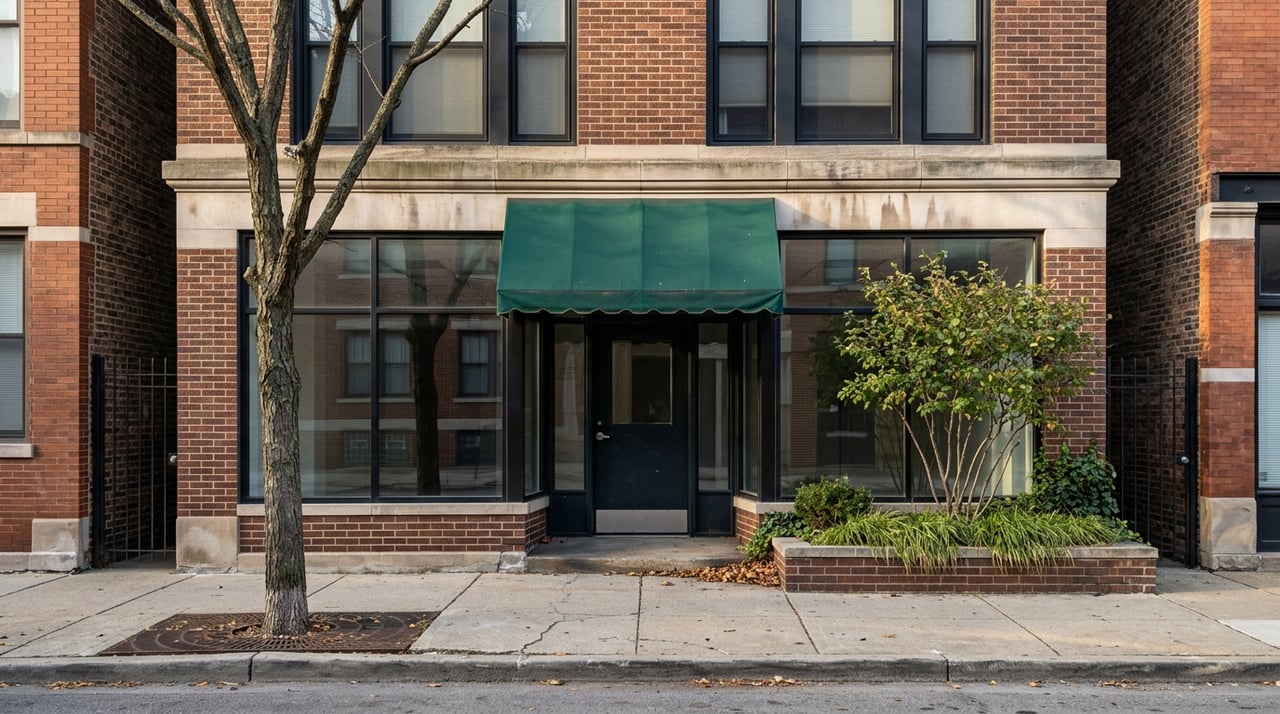
None of this is a coincidence of timing. Pilsen's commercial strip along 18th Street was built for a different economy, rows of narrow storefronts sized for single proprietors, not for concepts that go viral in their first month. A shop that needs 550 square feet to prove an idea often needs 2,000 or more to actually run it at scale, and Pilsen simply has fewer of those larger spaces sitting empty and ready. When a business here succeeds quickly, it tends to hit a ceiling that isn't about the neighborhood's appetite, it's about the size of the room it's standing in.
That's the mechanism worth understanding if you live here and want to know what's actually driving the turnover on your block. It isn't decline. It's throughput.
Not everything in Pilsen runs into this ceiling, and the exceptions are instructive. The neighborhood's farmers markets don't need a lease to scale, because their footprint resets every week.
| Market | Location | Schedule | Remaining 2026 dates |
|---|---|---|---|
| El Paseo Community Market | 944 W. 21st St. | Sundays, 10 a.m. to 2 p.m. | Through Oct. 4 |
| Plant Chicago Farmers Market | Davis Park, 4444 S. Marshfield Ave. | Second Saturdays, 11 a.m. to 3 p.m. | Sept. 12, Oct. 10, Nov. 7 |
That leaves five more Sundays of El Paseo before its season wraps up and three more Saturdays of Plant Chicago, including a plant swap on September 12 and a Halloween swap tucked into the October date. Plant Chicago also runs a free cooking demo at 11:30 a.m. each market day and accepts LINK, with a dollar-for-dollar match on produce purchases. Neither market has to solve the square-footage problem that keeps tripping up storefronts, because neither one is trying to hold onto the same four walls all year.
The other fixture that sidesteps the storefront math entirely is Pilsen's mural corridor, which doesn't answer to a landlord at all. The 16th Street embankment stretches roughly two miles from Halsted west toward Western Avenue, painted continuously since the late 1960s by artists including Mario Castillo, Ray Patlan, and Marcos Raya, and it's still active enough that Chicago Humanities is running guided walking tours through this fall. The tours are led by Luis Tubens, a Pilsen resident with more than 40 years around the neighborhood's public art, who walks visitors from wall to wall explaining what each one is actually saying about the community's history.
Most self-guided visits start near the National Museum of Mexican Art at 1852 W. 19th St. and work north and east toward 16th Street, picking up smaller, more experimental pieces in the alleys between 16th and 18th along the way. None of it requires a lease renewal. That permanence is worth noticing precisely because it's rare here.
Put the bookstore, the pinball museum, and the froyo shop next to each other and the neighborhood's real news isn't which businesses left. It's that Pilsen keeps generating ideas that work too well for the space they started in, and the neighborhood only gets to keep the ones that can find room to grow without leaving. Pilsen Community Books found that room a few blocks away. The Flip found it north in the Loop. Mikono is still deciding whether it finds it here at all.
If you're a longtime resident, that's worth watching over the next few months, not because it tells you anything about property values, but because it tells you which version of your neighborhood's food and culture scene sticks around, and which version becomes something you visit uptown instead.
For questions about what any of this means for property owners or renters on these same blocks, Alejandro Trujillo and the RE/MAX NEXT team track Pilsen's commercial and residential turnover as closely as its restaurant openings. Reach out anytime you want a local read on what's actually changing.
With a focus on continuing to educate their agents and continued attention to an amazing culture they have built, Alejandro & Mike have a huge vision for RE/MAX NEXT and their clients and work every day to achieve it.

ALEJANDRO TRUJILLO
LAKEVIEW 3401 N Broadway St Chicago IL 60657 GOLD COAST 1207 N Dearborn St Chicago IL 60610