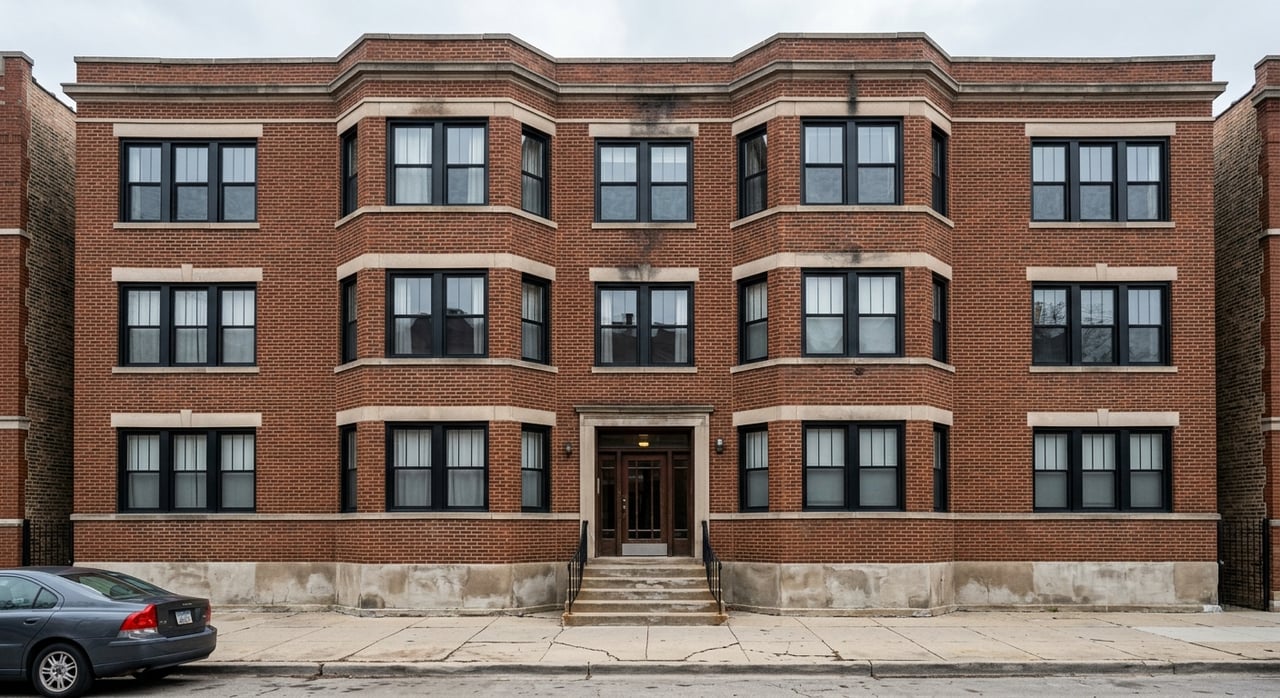
Buying Your First Chicago Multi-Unit Property Wisely
July 16, 2026
July 16, 2026
Buying your first multi-unit property in Chicago can feel like two goals wrapped into one. You want a place to live, but you also want a property that makes financial sense. That mix of homeownership and investment is exciting, but it comes with more moving parts than a typical first purchase. This guide will help you understand how to screen deals, think about financing, and prepare for the real responsibilities of owning a multi-unit building in Chicago. Let’s dive in.
Chicago gives you a wide range of housing types, price points, and neighborhood options, which is one reason many first-time buyers look at two-flats, three-flats, and four-unit properties here. The city also offers a mix of owner-occupant and investor activity, so multi-unit properties are a familiar part of the local market.
Citywide numbers can give you useful context, but they should not drive your final decision. Zillow’s June 2026 market report showed a typical Chicago home value of $359,897 and a typical rent of $2,275, while Redfin reported a median sale price of $419,749 over the prior three months and about 47 days on market. Those figures help frame the market, but exact unit rents, actual expenses, and property-specific condition matter much more when you evaluate a building.
Your first multi-unit purchase is not just about finding the biggest building your budget can handle. It is about finding a property you can manage responsibly while keeping your monthly costs realistic. If you plan to live in one unit, you also need to think about your day-to-day experience as both an owner and a landlord.
That means looking past the listing photos and asking practical questions. How stable are the current rents? What utilities does the owner pay? How old are the roof, windows, and mechanical systems? What repairs could show up in the first year?
If you plan to occupy one of the units, owner-occupied financing can open the door sooner than many first-time buyers expect. HUD states that FHA financing can allow down payments as low as 3.5% on one- to four-unit properties, which is a major reason many first buyers start there.
Conventional financing may still be an option depending on the price and property size. In Cook County, 2026 conforming loan limits are $1,066,250 for two units, $1,288,800 for three units, and $1,601,750 for four units. That means some Chicago multi-unit purchases can fit within conventional financing limits.
Freddie Mac also supports owner-occupied two- to four-unit primary residences and allows rental income from the other units to be considered for qualifying. That can make a meaningful difference when you are trying to balance your personal income with the income potential of the building.
A common mistake is assuming lenders will give you full credit for every rent dollar. In practice, qualifying income is usually more conservative.
Fannie Mae’s rental income guidance notes that when current leases or market rents are used, lenders may count only 75% of gross rent. The remaining 25% acts as a cushion for vacancy and maintenance. If a unit is vacant, lenders may rely on market rent supported by the appraisal instead of a signed lease.
HUD guidance for three- and four-unit properties also notes that net rental income must at least cover the projected monthly mortgage payment, and it references three months of PITI reserves after closing. In simple terms, lenders want to see that the property can carry its weight and that you have some backup funds in place.
Before you get attached to a building, run a rough cash-flow check. You do not need perfect lender math for this step. You just need a realistic filter.
A practical first-pass formula is to start with conservative rent, then subtract taxes, insurance, utilities, repairs, vacancy, management, and reserves. After that, compare what is left to the debt service. The goal is to avoid underwriting the property as if every unit stays full, every tenant pays on time, and nothing ever breaks.
Your first pass should be slightly tougher than the listing sheet. Chicago’s multi-unit properties often come with older systems, changing tax bills, and normal turnover costs. If the deal only works under perfect conditions, it may not work well in real life.
It helps to assume that rent, taxes, insurance, and repairs could all come in a little worse than expected. That mindset can protect you from stretching too far on your first purchase.
Chicago buyers should pay close attention to property taxes from the start. Cook County reassesses property values on a triennial cycle, which means the tax bill can change even if the building itself does not.
For a first-time multi-unit buyer, that is a big underwriting issue. You should model taxes with a cushion rather than simply plugging in the current bill and assuming it will stay flat. A property that looks affordable on paper can feel very different if taxes rise after reassessment.
Buying a multi-unit property means you are not just buying square footage. You are taking on legal and operational responsibilities. In Chicago, that part of the learning curve matters.
The Chicago Residential Landlord and Tenant Ordinance, often called the RLTO, applies to rental agreements for dwelling units in the city. However, dwelling units in owner-occupied premises containing six units or fewer are generally excluded, subject to limited carve-outs. For many first-time house hackers, that exclusion can change the compliance burden, though other city, state, and federal housing laws still apply.
Regardless of RLTO coverage, Chicago landlords must maintain the premises and promptly make necessary repairs. The city also sets a framework for entering a tenant’s unit.
Ordinary entry generally requires at least two days’ notice, access must happen at reasonable times, and repeated entry demands that amount to harassment are not allowed. If you are used to thinking like a homeowner only, this is one of the first mindset shifts to make.
Chicago’s security deposit rules are very specific. Landlords must provide a receipt when a deposit is collected, pay interest if the deposit is held more than six months, return the deposit within 45 days after move-out, and provide an itemized statement with receipts for damage deductions.
Noncompliance can expose a landlord to damages equal to twice the security deposit plus interest. For a first-time owner, this is a strong reminder that good records and clear procedures are not optional.
Chicago also requires several disclosures at or before the start of a tenancy. These include owner and agent contact information, written notice of cited code violations from the prior 12 months and any pending code enforcement litigation before a lease is signed or renewed, a bed-bug prevention brochure for new or renewed leases, and a copy of the RLTO summary attached to each written rental agreement.
Chicago also prohibits retaliation, and Illinois housing law bars discrimination based on protected characteristics, including source of income. As you prepare to become a landlord, consistency and documentation are essential.
Chicago’s housing stock includes many older multi-unit buildings, which can be a major advantage in character and layout but also a bigger maintenance variable. That makes inspections and repair planning especially important.
City code requires owners to maintain structures and outdoor areas in compliance with code. The RLTO also treats issues such as missing smoke alarms, structural integrity problems, or exit defects as material noncompliance. Those are not cosmetic issues. They can affect safety, livability, and your operating costs right away.
If the property was built before 1978, lead-based paint rules matter. Federal rules require disclosure of known lead-based paint information before the sale or lease of most pre-1978 housing, and Chicago separately requires owners to maintain dwellings and residential buildings to prevent lead hazards.
Pest control should also be treated as a real line item, not a surprise. Chicago requires a bed-bug prevention brochure for new or renewed leases, and the city’s health code treats bed bugs as a nuisance with specific extermination duties.
Chicago buyers sometimes focus heavily on price and rent while underestimating climate-related maintenance. Redfin’s city profile flags a minor flood factor and moderate heat factor, with 21% of properties at severe flood risk over 30 years and 95% of homes at moderate heat risk.
For you, that means budgeting for drainage, roofing, waterproofing, HVAC, and insurance contingencies. Even if a property looks stable today, weather-related costs can show up through repairs, tenant comfort issues, and long-term upkeep.
Your first Chicago multi-unit property does not need to be perfect. It needs to be understandable, financeable, and sustainable. The best first deal is often the one where the numbers are clear, the building condition is manageable, and the monthly risk is something you can comfortably carry.
That usually means focusing on exact rents, real tax history, realistic reserves, and a plan for maintenance from day one. When you combine that investor-style discipline with the goals of homeownership, you put yourself in a much stronger position to buy with confidence.
If you are thinking about buying your first multi-unit property in Chicago, working with an advisor who understands both the numbers and the day-to-day realities can make the process much clearer. Alejandro Trujillo can help you evaluate opportunities, understand local market conditions, and move forward with a strategy that fits your goals.
With a focus on continuing to educate their agents and continued attention to an amazing culture they have built, Alejandro & Mike have a huge vision for RE/MAX NEXT and their clients and work every day to achieve it.

ALEJANDRO TRUJILLO
LAKEVIEW 3401 N Broadway St Chicago IL 60657 GOLD COAST 1207 N Dearborn St Chicago IL 60610